
Mobile advertising has become one of the most important parts of digital marketing. As people spend more time using smartphones for shopping, entertainment, social media, communication, and online services, businesses have more opportunities to reach potential customers through mobile devices. However, reaching the right person with the right advertisement at the right time can be challenging.
This is where Artificial Intelligence (AI) is changing the way mobile advertising works. AI can analyze huge amounts of data, understand user behavior, predict customer interests, automate advertising decisions, and help marketers create more personalized campaigns.
From automated ad targeting to personalized recommendations and real-time optimization, AI is helping businesses make mobile advertising more effective and efficient. In this blog, we will explore how AI is used in mobile advertising, its major benefits, applications, challenges, and the future of AI-powered mobile marketing.
What Is AI in Mobile Advertising?
AI in Mobile Advertising refers to the use of artificial intelligence technologies to improve the planning, targeting, delivery, personalization, and measurement of advertisements displayed on mobile devices. As businesses increasingly invest in AI in Mobile Advertising, marketers can reach the right audiences more efficiently and improve campaign performance.
Traditional advertising often depends on marketers manually selecting audiences, creating campaigns, monitoring performance, and adjusting budgets. AI in Mobile Advertising can automate many of these processes by analyzing data and identifying patterns much faster than humans can.
For example, an AI-powered advertising system can analyze information such as browsing behavior, engagement, device activity, previous interactions, and campaign performance to help determine which users are more likely to respond to a particular advertisement.
The goal is simple:
Show the right advertisement to the right audience at the right time.
Why Is AI Important in Mobile Advertising?
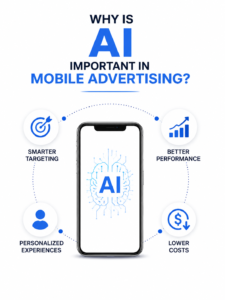
Mobile users generate enormous amounts of data through their interactions with apps, websites, social media platforms, and digital services. Manually analyzing all this information is difficult.
AI helps marketers process large datasets and turn them into useful insights.
For example, AI can identify patterns such as:
- Which users are likely to purchase a product
- Which advertisements generate the most engagement
- Which audience segments respond to specific offers
- Which time of day produces better results
- Which creative formats perform best
- Which campaigns are generating conversions
This allows marketers to make faster and more informed decisions.
AI-Powered Audience Targeting
One of the biggest applications of AI in Mobile Advertising is audience targeting. By using advanced data analysis and machine learning, AI in Mobile Advertising helps businesses identify the most relevant audiences for their campaigns.
Instead of targeting users only based on basic demographic information, AI can analyze behavioral patterns and identify audiences based on their interests and likelihood of taking an action.
For example, an online fashion store may want to advertise a new collection. AI can help identify mobile users who have shown interest in fashion-related content, visited similar product pages, interacted with previous advertisements, or demonstrated purchasing behavior.
This capability makes AI in Mobile Advertising highly effective, as it allows businesses to deliver more relevant advertisements while reducing wasted ad spend on users who are unlikely to be interested.
Personalized Mobile Advertising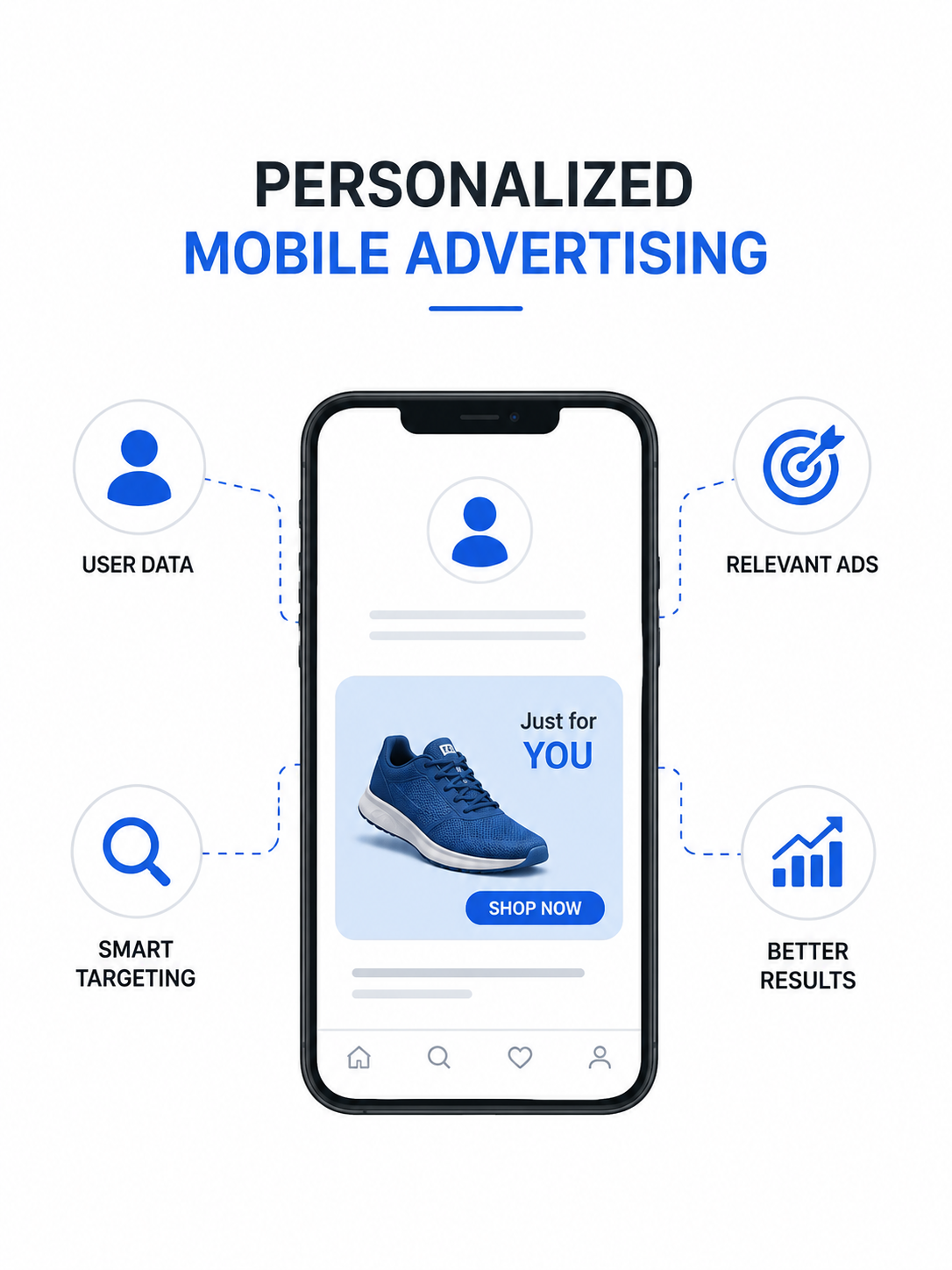
Personalization is another major benefit of AI.
Mobile users are exposed to thousands of advertisements, so generic advertising can easily be ignored. AI allows businesses to create more personalized experiences.
For example, an e-commerce application can use AI to recommend products based on a customer’s previous interactions.
A customer who frequently searches for running shoes may see advertisements related to running footwear, sports clothing, or fitness accessories rather than unrelated products.
Personalized advertising can improve user engagement because the advertisement is more relevant to the individual’s interests.
AI and Predictive Analytics
Predictive analytics uses historical and current data to estimate what may happen in the future.
In mobile advertising, AI can analyze previous campaign results and user behavior to predict:
- Which users are most likely to convert
- Which products may generate more sales
- Which advertisements may perform better
- Which customers may respond to an offer
- Which campaigns may provide better returns
For example, if AI identifies that users who watch a product video for more than 20 seconds are more likely to make a purchase, marketers can use this insight to improve their campaign strategy.
Predictive analytics helps businesses move from simply analyzing past performance to making more informed future decisions.
Automated Ad Optimization
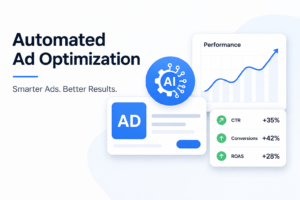
Managing mobile advertising campaigns manually can take a significant amount of time. Marketers may need to monitor clicks, impressions, conversions, cost, and other performance indicators continuously.
AI can automate many optimization tasks.
An AI-powered system can evaluate campaign performance and adjust factors such as audience targeting, bidding, budget allocation, and ad placement according to predefined goals.
For example, if one audience segment is generating more conversions at a lower cost, an automated system may allocate more budget toward that segment.
This allows marketers to spend more time on strategy and creative development rather than repetitive manual adjustments.
AI in Mobile Ad Creatives
AI is also changing the way advertisements are created.
Generative AI tools can help marketers produce:
- Ad headlines
- Product descriptions
- Social media captions
- Image concepts
- Video ideas
- Call-to-action messages
- Multiple creative variations
For mobile advertising, this is particularly useful because marketers often need different creative formats for different platforms and screen sizes.
For example, one campaign may require a vertical video for a social media platform, a square image for another platform, and a short banner for a mobile application.
AI can help marketers generate and test multiple variations more efficiently.
However, human creativity and brand guidelines remain important. AI-generated content should be reviewed before being used in advertising campaigns.
AI-Powered Recommendation Systems
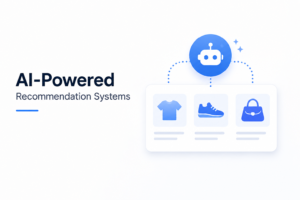
Recommendation systems are widely used in mobile applications and e-commerce platforms.
AI analyzes customer activity to recommend products, services, content, or offers that may be relevant to individual users.
For example, a shopping application can recommend products based on:
- Previous purchases
- Search history
- Product views
- Wishlist activity
- Similar customer behavior
- Engagement with previous recommendations
These recommendations can also be integrated into mobile advertising strategies.
When advertisements are connected to relevant recommendations, customers may be more likely to engage with them.
AI Chatbots and Conversational Advertising
AI-powered chatbots are another important development in mobile marketing.
Instead of sending users to a standard landing page, businesses can use conversational AI to interact with customers directly.
For example, a customer may click a mobile advertisement for a travel service and immediately interact with an AI assistant.
The assistant could answer questions about destinations, prices, packages, availability, or services.
This creates a more interactive advertising experience.
Conversational advertising can also help businesses collect useful customer information and understand customer needs.
AI and Real-Time Mobile Advertising
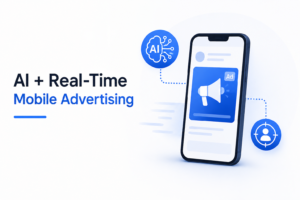
Mobile advertising often requires fast decision-making.
AI can analyze campaign data in real time and respond to changes in user behavior.
For example, if a particular advertisement suddenly starts receiving more engagement, AI systems can identify the trend and help marketers adjust campaign settings.
Real-time optimization can be especially valuable during seasonal campaigns, product launches, promotional events, and limited-time offers.
Instead of waiting until the campaign ends to analyze results, marketers can make improvements while the campaign is still running.
AI for Fraud Detection
Mobile advertising can also face problems such as fake clicks, fraudulent impressions, automated traffic, and other forms of advertising fraud.
AI can help detect unusual patterns that may indicate fraudulent activity.
For example, if a large number of clicks originate from unusual sources or show suspicious behavior, AI systems can identify these patterns and flag them for investigation.
Fraud detection helps advertisers protect their advertising budgets and improve the reliability of campaign data.
Benefits of AI in Mobile Advertising
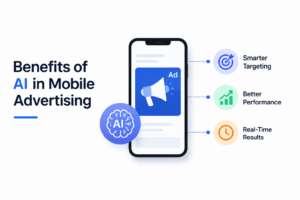
AI offers several important benefits to digital marketers.
1. Better Targeting
AI helps advertisers identify audiences that are more likely to be interested in their products or services.
2. Improved Personalization
Advertisements can be customized according to user interests and behavior.
3. Higher Efficiency
Automation reduces the amount of repetitive manual work required to manage campaigns.
4. Better Decision-Making
AI provides data-driven insights that help marketers make more informed decisions.
5. Improved Campaign Performance
Continuous optimization can help improve engagement, conversions, and advertising efficiency.
6. Cost Optimization
AI can help identify underperforming campaigns and allocate resources toward better-performing opportunities.
7. Faster Content Creation
Generative AI can help marketers create multiple advertising concepts and variations quickly.
Challenges of Using AI in Mobile Advertising
Although AI offers many advantages, businesses must also consider its challenges.
Privacy Concerns
Mobile advertising depends heavily on user data. Businesses must handle customer information responsibly and follow applicable privacy regulations.
Consumers are increasingly concerned about how their personal information is collected and used.
Data Quality
AI systems depend on data. Poor-quality, incomplete, or inaccurate data can lead to poor predictions and ineffective advertising decisions.
Lack of Human Creativity
AI can generate content and identify patterns, but it does not replace human creativity, strategic thinking, or emotional understanding.
Over-Automation
Giving AI complete control over advertising without human supervision can create problems. Marketers should regularly monitor AI-powered campaigns and ensure that automated decisions align with business objectives.
Transparency
Businesses should understand how AI systems make important advertising decisions, particularly when automated systems influence targeting or customer experiences.
How Businesses Can Use AI Effectively
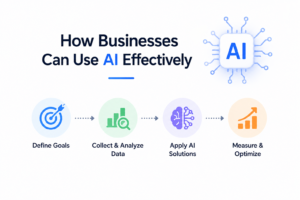
Businesses should not adopt AI in Mobile Advertising simply because it is a popular technology. Instead, they should identify specific marketing problems that AI in Mobile Advertising can solve and align its use with clear business objectives.
A good approach is to begin with clear objectives.
For example:
Goal → Collect Data → Apply AI → Analyze Results → Optimize Campaign
Businesses should also test AI in Mobile Advertising strategies on a smaller scale before implementing them across all advertising campaigns. This allows marketers to measure results, identify opportunities, and make improvements before expanding their efforts.
Human marketers should remain involved in the process. While AI in Mobile Advertising can provide recommendations and automation, marketers bring creativity, strategic direction, brand knowledge, and ethical oversight that are essential for long-term success
The Future of AI in Mobile Advertising
The future of AI in Mobile Advertising will likely become increasingly automated and personalized as businesses look for smarter ways to connect with consumers.
AI in Mobile Advertising is expected to play a larger role in audience prediction, creative generation, campaign optimization, customer interaction, and performance analysis.
Instead of creating one advertisement for a large audience, marketers may increasingly use AI to create different advertising experiences for different customer segments. This growing use of AI in Mobile Advertising will help brands deliver more relevant and engaging experiences to their audiences.
For example, the same product could be presented differently depending on the user’s interests, previous interactions, purchasing stage, and preferred content format.
At the same time, privacy and responsible data usage will become increasingly important. Successful businesses will need to balance personalization with transparency and respect for consumer preferences while implementing AI in Mobile Advertising strategies responsibly.
Conclusion
AI in Mobile Advertising is transforming the industry by making campaigns more intelligent, personalized, automated, and data-driven. From audience targeting and predictive analytics to creative generation, recommendation systems, chatbots, fraud detection, and real-time optimization, AI in Mobile Advertising provides marketers with powerful tools to improve advertising performance and maximize campaign results. As businesses continue to adopt AI in Mobile Advertising, they can deliver more relevant ads, enhance customer engagement, and achieve better returns on their marketing investments.
However, AI should not be viewed as a complete replacement for human marketers. The best results come from combining AI technology with human creativity, strategy, and decision-making.
As mobile usage continues to grow, businesses that learn how to use AI responsibly can create more relevant advertising experiences, improve campaign efficiency, understand their audiences better, and achieve stronger marketing results.
The future of mobile advertising is not simply about showing more advertisements. It is about using technology to deliver more relevant messages, to the right people, at the right moment. AI is becoming one of the key technologies making that future possible.